


You are travelling north on the M6. It’s 4°C, it’s raining, and your dashboard is screaming that you have 40 miles of range left. You open your car’s navigation, search for a rapid charger, and see a nice, green “Available” icon at the next service station. You breathe a sigh of relief. You think you’ve cracked it.
You haven’t. In the world of EV ownership, “available” is a polite, corporate term that often masks a chaotic reality. After eight years of driving electric, I have learned that the car’s built-in navigation is the last thing you should trust when you are low on juice. Here is how to navigate the messy, data-driven reality of real-time charging info.
The “Range-o-meter” isn’t your friend
Most manufacturers still lean into aggressive optimism when calculating your range. They want to sell you the car, not warn you that a cold, wet climb up Shap Fell will chew through your battery 20% faster than their brochure promised. When your car tells you that you have 40 miles of range, it is looking at your previous 50 miles of driving. It does not know that you are about to merge onto a motorway where wind resistance at 70mph behaves like an invisible anchor.
I sanity-check every range estimate by subtracting 15% immediately if the temperature is below 10°C or if I’m travelling above 60mph. If the math doesn’t hold up after that haircut, I start looking for a charger. This isn’t pessimism; it’s a risk-management strategy.

The myth of “Available” on your infotainment screen
When you see a charger listed as “Available” on your built-in dashboard screen, you are looking at a snapshot in time. The data latency between the charging network and your car’s satellite navigation system can be anywhere from three to ten minutes. In that time, three other EVs could have pulled in. Worse yet, the “Available” status often only tells you if the unit is *online*, not if it is *functional*.
This is where real-world tools change the game. I rely on a mix of sources to build a picture of whether I’m going to spend my afternoon in a queue or plugged in and grabbing a coffee.
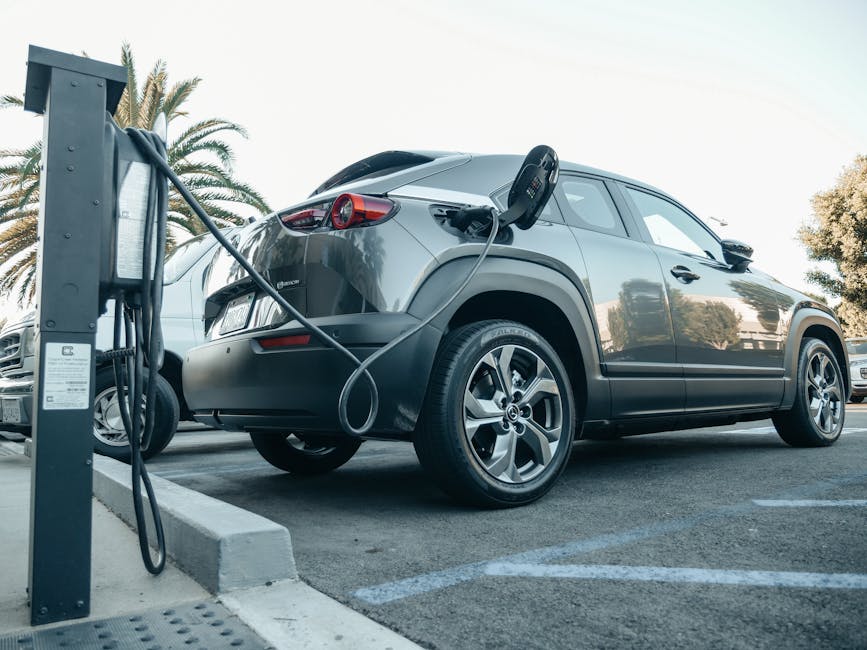
The Real-Time Charging Info Stack
- Zap-Map: This is the backbone of the UK EV experience. Unlike the stock navigation, Zap-Map provides crowdsourced data. If a charger is broken, another driver has usually marked it as “out of service” within the hour.
- Disqus and Community Forums: Never underestimate the power of the comments section. On specific EV forums, you will find users discussing recurring faults at specific motorway hubs. If a charger network is known for “handshake failures” (where the car and charger can’t agree on a protocol), you will see it mentioned here long before the manufacturer admits it.
- Live Network Apps: If you are using a specific operator, like Ionity or Gridserve, check their dedicated app. They provide the most granular view of which specific stalls are occupied.
Risk vs. Reward: Should you perform that route adjustment?
When you’re on the move, a route adjustment EV strategy is a trade-off. You are weighing the risk of running out of power against the reward of reaching your destination faster. If the next rapid charger is “Available” but located at a notoriously busy hub, I often choose to skip it. I will take a 10-mile detour to a slower, quieter, but more reliable charger. The time spent driving that detour is usually less than the time spent waiting for a faulty charger to reset or waiting for a spot to open evpowered.co.uk up.
Why we need to talk about “avoidable hassles”
The biggest annoyance in the EV space is the industry’s obsession with buzzwords like “seamless experience.” It isn’t seamless yet. Real-time charging info is currently a patchwork quilt of data sources. By relying solely on the car’s onboard navigation, you are engaging in passive consumption of corporate-provided data. You are letting the car decide your risk threshold.
Instead, be an active participant. Use the feedback loops available to you:
Final thoughts on EV road trips
Ultimately, driving an EV requires a shift in mindset. You stop viewing a charge stop as a “refuelling event” and start viewing it as a logistics puzzle. I have spent eight years refining this process, and I still don’t trust a single source of data. I cross-reference everything.
The next time your dashboard says you have 40 miles of range and a charger is “Available,” don’t just blindly follow the line on the map. Pause. Check the crowdsourced status, look at the weather, and ask yourself if you’re comfortable taking the gamble. If the data looks thin, look for the next hub. It is almost always better to arrive twenty minutes late than to be stranded in a cold car waiting for a broken piece of technology to wake up.
Drive smarter, cross-reference your data, and keep your eye on the real-world conditions rather than the numbers on the dash. That is how you turn an EV road trip from a stressful gamble into a manageable commute.
